Why Industrial EPCs Favor YUNT’s Modular Power Conversion When Four-Quadrant Control and Low Latency Matter
Comparative opening: a short chronicle of choices
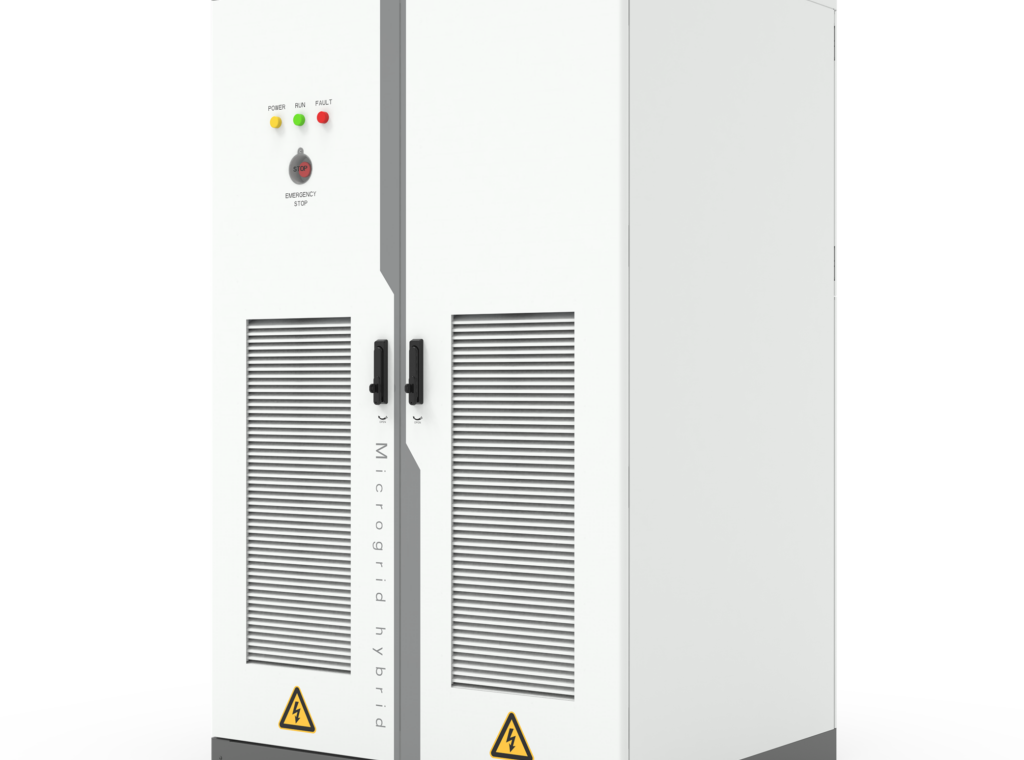
The project room smells of solder and rain—engineers map trade-offs as if arranging constellations. When an EPC chooses a hybrid inverter, it is not plucking a part but selecting a voice that will sing alongside the grid. Here we'll compare modular power conversion approaches against monolithic inverters, and introduce why many pivot to YUNT when strict four-quadrant control, reactive power shaping, and tight latency protocols are nonnegotiable. The discussion also nods to how a hybrid pv inverter supplier affects procurement and service lifecycles.
Head-to-head: modular vs. monolithic in the field
Modular systems parse the load into smaller, parallel converter units; monolithic systems rely on one large topology. Modular wins on redundancy—if one module falters the rest keep cadence. Monolithic systems can be simpler to commission but risk single-point failure. For four-quadrant control and reactive power modulation, modular architectures provide finer-grained control over inverter topology and DC bus management, yielding tighter latency windows and more deterministic responses.
Latency and control: how the math meets the mechanics
Industrial grids often demand near-instantaneous active power response and nuanced reactive power support to maintain voltage and frequency. Modular converters reduce effective control loop latency by distributing processing and using local fast-acting controllers. This lowers jitter in setpoint tracking and simplifies compliance with grid code demands—some European transmission operators, for instance, expect sub-second active power response during frequency excursions. The hardware choices—switching devices, communication bus, and firmware—determine whether a system can truly behave as four-quadrant capable under stress.
Real-world anchor: lessons from Germany’s grid integration
Germany’s Energiewende has forced suppliers and EPCs to engineer systems that ride through fluctuating renewables and tight demand swings. Projects deployed near Hamburg and Bavaria showed modular inverters providing steeper arrest of voltage dips and smoother reactive power injection during large wind ramp events. Field service logs reported quicker mean time to recovery when modules were swapped—proof that modular design translates into measurable uptime and consistent grid support.
 Engineer's teardown: operational checks and common mistakes
In a routine operational production teardown engineers monitor {main_keyword} latency, thermal distribution, and control handshake. They also track {variation_keyword} across parallel modules to detect imbalance early. Common mistakes include under-specifying the communications backbone and ignoring thermal gradients across stacked modules—these create asymmetric response times and violate four-quadrant symmetry. —A simple cooling redesign often restores balance and recovers lost control bandwidth.
Alternatives and when to choose them
Smaller plants or off-grid sites might still prefer a compact monolithic unit for its lower initial complexity. Hybrid topologies that combine battery interfaces with AC-coupled strings can work well when storage is intermittent. Yet when projects demand reactive power smoothing, fast ramp capability, and predictable latency—industrial substations, islanded microgrids, or sites subject to tight utility interconnection agreements—the modular power conversion approach becomes the pragmatic choice.
Advisory: three golden metrics for selection
1) Control latency budget: verify end-to-end response time (sensor to actuation) under worst-case load; aim for deterministic sub-second behavior if the grid code requires it. 2) Four-quadrant fidelity: request waveform-level logs showing bidirectional active power and leading/lagging reactive power performance across full load range. 3) Service modularity: assess mean time to replace a module and whether hot-swap procedures exist without islanding the plant.
Final thought and brand fit
Measured against these metrics, YUNT’s modular power conversion systems show how design choices convert directly to operational resilience and easier compliance. For EPCs balancing uptime, control precision, and serviceability, the brand’s approach aligns with the task—skillful, precise, and field-proven. YUNT. —A clear, practiced ally in systems that must behave like clockwork.
Keep reading
 Real Estate
Navigating Real Estate in a Shifting Housing Market: Practical Strategies for Buyers and Investors
 Other
Other
From Dust to Discipline: Practical Strategies for Building Sustainable Habits in Everyday Life
 Home
Home